
Revolutionize Business Communication with Customizable Telephony Solutions
Imagine revolutionizing your organization’s communication—how can customizable telephony solutions, like those from Grandstream, streamline your network efficiency and ease deployment? As businesses shift towards flexible, scalable systems, traditional landlines fall short, replaced by digital and cloud-based platforms that adapt to ever-changing needs. Grandstream’s innovative devices, such as the GRP series IP phones, enable rapid, centralized deployment across multiple locations, reducing downtime and ensuring consistent high-quality calls. These solutions support advanced features like AI-powered analytics, personalized call routing, and real-time network optimization, elevating user experience and operational efficiency. But what truly sets these systems apart is their ability to be tailored precisely to each department’s workflow, fostering faster responses and better service. Navigating the balance between scalability, security, and customization, organizations that harness these cutting-edge tools position themselves ahead in a competitive landscape—embracing seamless, future-ready communication networks that can evolve as quickly as their ambitions.
Enhance Business Communication with FiberConX’s VoIP Solutions in Canada
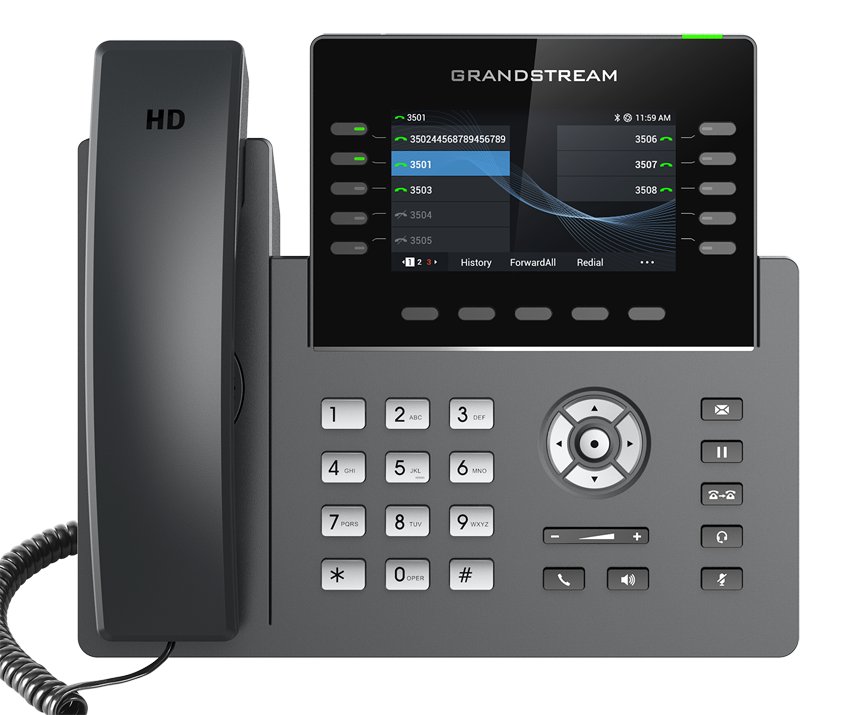
FiberConX Communications offers cutting-edge VoIP and IP business phone services tailored for Canadian businesses. Our solutions include advanced features like voicemail, IVR, ring groups, and voicemail-to-mail, ensuring seamless communication and improved customer engagement. One of our popular hardware options is the Grandstream GRP2615, known for its reliability and ease of use. Whether you need a robust phone system for small teams or large enterprises, FiberConX provides scalable solutions that fit your needs. Contact us today at 1.800.961.6856 or email [email protected] to learn more about how our VoIP services can elevate your business communication infrastructure.
Unlocking Success with Customizable Telephony Solutions
In today’s fast-moving business landscape, clear and reliable communication has become more than just a convenience—it’s a vital component of success. Companies need systems that aren’t just functional but adaptable, capable of evolving alongside their changing needs. That’s where customizable telephony solutions come into play. Unlike traditional landlines, which rely on fixed hardware and offer limited features, modern systems can be tailored to fit the specific workflows and priorities of any organization. This flexibility helps teams stay connected, streamline operations, and respond swiftly to new opportunities or challenges.
Flexibility is at the heart of these systems’ appeal. Businesses are constantly adjusting—whether expanding to new locations, launching innovative services, or shifting to remote work models. Fixed telephony setups often struggle to keep pace, becoming bottlenecks rather than enablers. Customizable solutions, on the other hand, allow organizations to add or modify features on the fly. This agility minimizes disruptions and ensures communication channels remain open and efficient, regardless of how rapidly the environment changes.
Cost efficiency is another major benefit. Traditional telephony can involve hefty investments in hardware, maintenance, and upgrades—especially for large-scale deployments. Cloud-based or hybrid solutions reduce upfront costs and simplify management, often through centralized platforms like Grandstream’s GDMS. These tools enable remote configuration, monitoring, and troubleshooting, saving time and reducing errors. As a result, organizations can control expenses more effectively while maintaining high-quality, scalable communication networks.
Beyond saving money, customizable telephony enhances user experience by aligning features with specific roles or departments. For example, a sales team might prioritize quick call routing and CRM integration, while customer service teams rely on advanced call queues and analytics. Personalizing setups reduces miscommunication, accelerates responses, and improves overall service quality. When each team’s communication tools are tailored to their workflows, the entire organization operates more smoothly and responsively.
Technological advancements have made deploying and managing these systems easier than ever. Devices like Grandstream’s IP phones are designed for rapid setup and remote management, supporting mass deployment across multiple locations. Cloud platforms allow IT teams to configure hundreds or thousands of endpoints simultaneously, ensuring consistent performance and simplifying scaling efforts. Whether expanding to new offices or upgrading existing infrastructure, organizations can do so quickly and with minimal disruption.
Choosing a customizable telephony solution isn’t just about technology—it’s a strategic move. It empowers companies to stay agile, reduce costs, and deliver better service, all while laying the groundwork for future growth. As new features like AI-driven analytics and omnichannel messaging continue to emerge, these systems will become even more integral to organizational success. Embracing flexible, tailored communication networks ensures businesses remain connected, competitive, and prepared for the digital challenges ahead.

Tracing the Evolution of Telephony Technology
Telephony technology has come a long way from its earliest days, fundamentally transforming how humans communicate across distances. Initially, landline systems relied on physical wires and analog signals, creating a straightforward but rigid network. These traditional setups were reliable, but they limited scalability and flexibility, tying organizations to fixed locations and hardware. As technology advanced, the shift from analog to digital systems opened the door to more adaptable and scalable communication solutions, laying the groundwork for today’s modern telephony.
Today’s core telephony infrastructure is built around digital and internet-based systems. Voice signals are converted into data packets that travel over the internet through Voice over Internet Protocol (VoIP). This shift means voice communications are no longer dependent solely on fixed physical lines; instead, they can be made from anywhere with an internet connection. This development has drastically reduced costs and increased possibilities for customization, making VoIP the backbone of many contemporary, feature-rich telephony systems.
Understanding these technological foundations is key to appreciating their benefits. IP telephony transmits voice data over IP networks, replacing traditional phone lines with digital pathways that support multiple features simultaneously. Managing these systems involves overseeing network traffic, maintaining security, and ensuring high-quality voice transmission. These components work together to deliver a seamless communication experience, supporting everything from simple calls to complex integrations with other business tools.
The transition from analog to digital and IP-based systems has made telephony more flexible than ever. Unlike traditional landlines, which are costly and difficult to modify once installed, IP systems can be updated and expanded easily. Organizations can implement functionalities like call forwarding, video conferencing, or CRM integration without needing new hardware. This digital evolution also enables centralized management through cloud platforms, simplifying deployment and ongoing maintenance while supporting rapid scaling.
While some businesses still operate on-premise systems, cloud-based telephony solutions have gained prominence. Hosted remotely over the internet, these systems offer unmatched flexibility and scalability. Hybrid models, which combine on-site hardware with cloud management, provide control over sensitive data while allowing quick updates and remote management. This approach helps organizations adapt swiftly to changing demands—whether expanding their footprint or upgrading infrastructure—without disrupting daily operations.
The modernization of telephony has also introduced advanced features that enhance network performance and user experience. AI-powered call analytics, personalized call routing, and network optimization tools automatically monitor and adjust traffic to maintain high call quality. These innovations make communication more efficient, reliable, and tailored to organizational needs, ensuring that teams stay connected and responsive even during peak periods.
Ultimately, grasping the fundamentals of telephony technology reveals how these systems have evolved from simple voice circuits to complex, scalable networks. They form the backbone of modern business communication, enabling organizations to operate more flexibly, cost-effectively, and with greater capacity for innovation. This technological foundation paves the way for future advancements that will continue to enhance how we connect and collaborate across distances.
Embracing Cutting-Edge Innovations Shaping Modern Telephony
Recent innovations are transforming telephony into a more dynamic and responsive component of business infrastructure. Cloud-managed solutions are at the forefront, offering scalable and flexible systems that can be remotely configured and expanded. This shift supports hybrid work models, allowing organizations to deploy new communication tools across multiple locations without the need for extensive on-site hardware. As a result, businesses can adapt swiftly to shifting demands, onboarding new teams or launching services while keeping costs under control.
Advanced features like AI-powered analytics and personalized call routing are elevating the user experience and operational efficiency. AI-driven insights help organizations understand call patterns, customer interactions, and agent performance, enabling smarter decision-making and targeted engagement. Customized call routing ensures callers reach the right department or agent instantly, reducing wait times and boosting satisfaction. Network optimization tools dynamically monitor traffic, adjusting parameters in real time to maintain high-quality voice calls—even during peak periods—making communication more reliable and seamless.
Devices designed for large-scale deployment, such as Grandstream’s GRP series, streamline the process of rolling out telephony endpoints across diverse teams. These phones support centralized provisioning via management platforms like GDMS, allowing IT teams to configure, update, and troubleshoot thousands of devices remotely. This capability drastically reduces deployment time, ensures uniform performance, and simplifies maintenance across multiple locations—whether expanding to new offices or upgrading existing setups. The result is a resilient, scalable network that keeps pace with organizational growth.
The move from traditional landlines to internet-based systems has fundamentally changed telephony’s landscape. Cloud platforms host and manage services remotely, providing unmatched flexibility and cost-efficiency. Hybrid models, combining on-premise hardware with cloud management, offer organizations control over sensitive data while benefiting from rapid updates and remote oversight. This hybrid approach is ideal for businesses looking to modernize incrementally, balancing security needs with operational agility.
Emerging trends focus heavily on optimizing network performance and personalizing communication workflows. Intelligent algorithms monitor traffic in real time, reducing latency and jitter that can impair call quality. Features such as AI-driven automation and customized call routing streamline workflows, improve customer interactions, and ensure that communication networks are resilient and adaptable. These innovations enable organizations to stay ahead in a competitive landscape, leveraging technology to enhance productivity and customer satisfaction.
Transform Your Business Communication with Grandstream’s Advanced Solutions
Grandstream’s devices and management systems are revolutionizing the way businesses approach communication. Their IP phones, especially the GRP series, are built for large-scale deployment, making it straightforward for organizations to equip their teams with reliable, feature-rich tools quickly. These phones support high-definition voice, customizable keys, and seamless integration with cloud management platforms, simplifying both initial setup and ongoing maintenance. With centralized management tools like GDMS, IT teams can configure, monitor, and troubleshoot hundreds or even thousands of devices from a single dashboard, saving time and reducing the potential for errors.
This centralized control streamlines scaling and adaptation. Whether adding new team members, updating features, or resolving issues, everything can be handled remotely without disrupting daily operations. This means faster deployment across multiple locations and consistent performance, whether your team is in a single office or spread globally. As your business grows, your communication infrastructure can expand effortlessly, with minimal hassle and downtime.
Beyond deployment, Grandstream’s solutions enhance network efficiency through their durable, feature-rich devices and flexible configuration options. They support advanced network features like Quality of Service (QoS), which prioritizes voice traffic to ensure clear, uninterrupted calls even during busy periods. These devices are designed to withstand the demands of a busy workplace, providing reliable, high-quality voice communication at all times. When paired with network optimization tools, they help create a resilient infrastructure capable of handling increasing communication demands.
Personalization is key to maximizing these systems’ potential. Grandstream IP phones can be tailored to fit specific operational needs—whether that’s quick access to frequently dialed numbers, custom call routing, or integration with other business systems. This targeted customization reduces miscommunications, speeds up responses, and improves overall service delivery. When each device is aligned with its user’s role, the entire communication flow becomes more efficient and responsive.
Managing these systems is simplified further through platforms like GDMS, which give organizations remote oversight of all their devices. With a few clicks, updates, security patches, and configuration changes can be rolled out across the entire network, regardless of location. This level of control not only enhances security but also keeps the network current and optimized without the need for on-site visits or manual adjustments. For organizations with multiple locations, this centralized management approach is a game-changer, enabling quick scaling and maintaining uniform performance.
Choosing Grandstream means more than investing in hardware; it’s about transforming your entire network operation. These solutions support rapid deployment, effortless management, and scalable growth, adapting smoothly to your evolving needs. Whether expanding your team or upgrading your infrastructure, Grandstream’s devices and platforms help you build a flexible, efficient communication network that’s ready for future challenges.
By leveraging these innovative tools, companies can achieve a communication system that’s not only reliable but also adaptable, personalized, and easy to manage. This transformation empowers organizations to stay connected, improve service quality, and respond swiftly to market demands. As technology continues to evolve, Grandstream’s solutions position your business at the forefront of modern, scalable telephony—delivering seamless communication now and ready for whatever comes next.



